








Insurance stocks shed value despite rising profits, recapitalisation gains
Despite strong profit growth recorded by major Nigerian insurers in the first nine months of the year, investors have continued to sell down their shares, exposing a widening disconnect between improved corporate earnings and stock market performance.
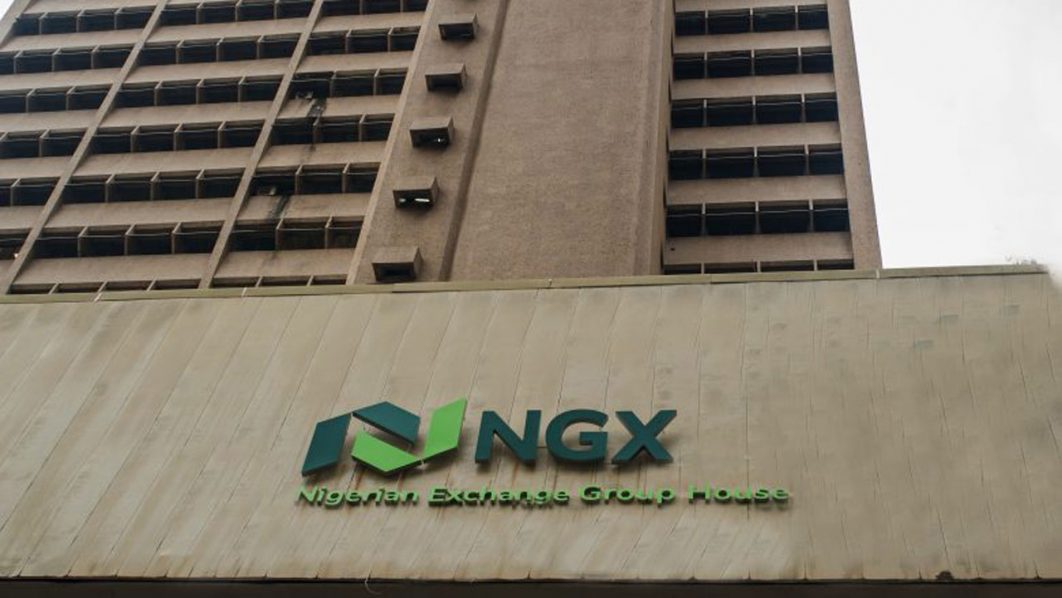
The development has left listed insurance companies among the weakest performers on the Nigerian Exchange (NGX), raising concerns about investor confidence in the sector even as operators report stronger earnings following the industry's recapitalisation exercise.
AIICO Insurance Plc, for instance, recorded a 27 per cent increase in nine-month profit before tax to N19.4 billion, while its profit after tax rose to N17.3 billion, exceeding the N14.4 billion projected in its earlier earnings guidance to the exchange. However, its share price fell by 6.6 per cent on the day of the announcement.
The trend was also reflected in the performance of other major insurers. AXA Mansard Insurance Plc reported an 81 per cent increase in profit after tax to N10.9 billion, more than double its earlier forecast of N5.1 billion, while Coronation Insurance Plc recorded a 71 per cent rise in profit.
NEM Insurance Plc also posted N26.8 billion in earnings within nine months, surpassing its full-year 2025 profit.
Despite the strong results, the share prices of several major operators remained under pressure, suggesting that investors are looking beyond headline earnings to assess the sustainability of profits, capital requirements and the quality of insurers' underlying businesses.
AXA Mansard, which opened the year at N13.70, traded around N11.65 in early November, representing a decline of about 15 per cent. Coronation Insurance fell from N3.25 to approximately N2.22, while Cornerstone Insurance Plc and AIICO Insurance recorded year-to-date declines of about 24 per cent and six per cent respectively.
The weakness has extended across the sector, with the NGX Insurance Index declining by 5.52 per cent in October and 13.64 per cent year-to-date, making it the only major sectoral index in negative territory.
This contrasts sharply with the performance of the broader market, as the All-Share Index gained about 60 per cent, while the banking and oil and gas indices advanced by approximately 60 per cent and 128 per cent respectively over the period.
The reversal is particularly significant given that insurance stocks returned about 66 per cent in 2025, outperforming the broader market's 51 per cent gain.
Market analysts have linked the weak performance to concerns over potential shareholder dilution arising from capital raising, the sustainability of investment-driven earnings and the inability of some operators to convert reported profits into operating cash flows.
Under the Nigerian Insurance Industry Reform Act 2025, operators were required to meet new minimum capital requirements by July 2026, prompting several companies to raise additional funds through rights issues and other capital market transactions.
Although the recapitalisation exercise is expected to strengthen underwriting capacity, improve claims-paying ability and enhance the industry's resilience, the issuance of additional shares has raised concerns about the impact on existing shareholders' ownership and earnings per share.
For instance, Coronation Insurance's share count increased by almost a fifth following its N9.2 billion capital raise, while AXA Mansard shareholders approved a rights issue of up to N18.3 billion.
Investors are also questioning the quality of earnings, particularly as a substantial portion of profit growth across some operators came from investment portfolios rather than improvements in core insurance underwriting.
High yields on government bonds and Treasury Bills have supported investment income, enabling insurers with significant fixed-income portfolios to record stronger returns.
At AIICO Insurance, investment income contributed more significantly to profit growth than its insurance operations, while its underwriting margin declined to approximately eight per cent.
Rising reinsurance costs and foreign exchange losses have also weighed on the operating performance of some companies, raising questions about whether the current earnings momentum can be sustained if interest rates and investment yields decline.
Another concern is the ability of insurers to translate reported earnings into actual cash flows, with some companies recording significant increases in outstanding premiums and receivables.
NEM Insurance's operating cash flow, for instance, swung from an inflow of N10.3 billion to an outflow of N1.1 billion, as premiums owed by customers increased from less than N100 million to N9.5 billion.
Custodian Investment Plc also recorded negative operating cash flow, although the development may partly reflect the merchant banking business now included in its consolidated accounts.
These developments have heightened concerns about the sustainability of earnings, particularly where rising profits are not matched by improved cash generation and stronger underwriting performance.
The market's reaction, however, has not been uniform, as some insurance stocks have maintained positive returns despite the broader sector downturn.
Custodian Investment shares gained about 50 per cent year-to-date, trading around N65, although the stock has retreated from its April peak of approximately N87, despite the company's 26 per cent growth in nine-month profit before tax.
Similarly, Fortis Global Insurance Plc recorded a substantial increase in its share price, although its reported 805 per cent appreciation in the first nine months falls to about 126 per cent after adjusting for its one-for-four share reconstruction. The company, however, remains loss-making.
Guinea Insurance Plc also gained about 43 per cent in October following its capital raise, despite reporting a loss in the first half of the year.
The contrasting performances suggest that share price movements have not necessarily reflected the underlying financial strength of listed insurers, further complicating investment decisions in the sector.
Meanwhile, dividend payments are emerging as another important consideration for investors seeking evidence that improved earnings can translate into shareholder returns.
Cornerstone Insurance's last dividend payment of 28 kobo offers a yield of about six per cent at prevailing market prices, while Custodian Investment provides a yield of approximately four per cent.
Coronation Insurance, which has not paid dividends, has indicated its intention to resume payouts within a year, while AXA Mansard did not pay a dividend in 2026.
Industry watchers believe that the release of full-year financial results early next year could provide a clearer picture of whether the earnings growth recorded during the nine-month period is sustainable, particularly following the substantial capital injections by operators.
The ability of insurers to maintain profitability on their enlarged capital bases, improve underwriting margins, reduce outstanding premiums and generate stronger operating cash flows will be critical to restoring investor confidence.
For an industry seeking to deepen insurance penetration, expand underwriting capacity and attract long-term investment following the recapitalisation exercise, the persistent weakness in share prices presents another challenge.
While stronger capitalisation and rising profits represent important gains for the industry, investors appear to be demanding clearer evidence of sustainable earnings, improved operational efficiency and consistent returns before re-rating insurance stocks.