






Sanwo-Olu tasks banks on N4.65tr recapitalisation to drive job creation
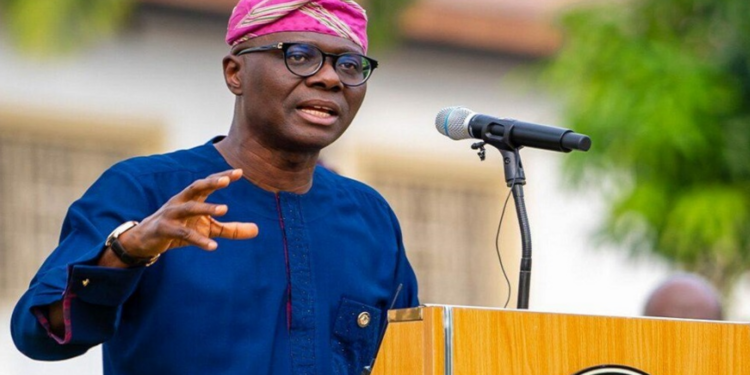
Lagos State Governor, Babajide Sanwo-Olu, has challenged Nigerian banks to convert the N4.65 trillion raised through the recent recapitalisation exercise into increased lending to businesses, industrial expansion and job creation, warning that stronger balance sheets must translate into measurable economic benefits.
Sanwo-Olu, who spoke at the 2026 Fellowship Investiture Ceremony of the Chartered Institute of Bankers of Nigeria (CIBN) in Lagos, said the next phase of the banking sector reform should focus on supporting productive enterprises rather than merely improving the financial strength of lenders.
He said recapitalisation had strengthened banks’ capacity to withstand economic pressures and undertake larger transactions, but argued that the real test would be the extent to which the additional capital supported industries and created opportunities for Nigerians.
“Recapitalisation has strengthened the capacity of our banks to withstand economic pressures and undertake larger transactions. But raising capital is only the beginning,” he said.
According to him, the success of the exercise would be measured by how effectively banks finance productive enterprises, industrial expansion and economic opportunities.
The governor identified affordable, long-term financing as critical to the growth of manufacturing, agriculture and small businesses, noting that manufacturers require substantial funding to acquire machinery, expand production and compete in international markets.
He also said agricultural processors needed access to credit for storage, processing and distribution, while growing enterprises required financing arrangements that reflected their operating realities.
Sanwo-Olu urged banks to develop lending models that could accommodate the longer gestation periods of industrial projects without compromising prudent risk management.
He cited investment opportunities in Lagos, including the Lekki Deep Sea Port, industrial activities along the Lekki corridor, rail and road infrastructure, and developments in the state’s electricity sector, as areas where stronger financial sector participation could support manufacturing, logistics, energy and trade.
The governor’s call comes as questions emerge over whether the banking sector’s stronger capital base will translate into improved credit access for businesses, particularly manufacturers and small and medium-sized enterprises.
At the same event, the Chief Executive Officer of the Nigerian Economic Summit Group, Tayo Aduloju, raised concerns over the decline in bank credit to manufacturers, which he said fell by about 34 per cent from N8.5 trillion in December 2024 to N5.6 trillion.
Aduloju said manufacturing accounted for only 8.7 per cent of bank credit, while oil and gas, finance and insurance received about 46 per cent, raising concerns about the allocation of credit to productive sectors.
He also identified high borrowing costs, liquidity constraints and lending risks as factors limiting access to finance, warning that government borrowing was intensifying competition for available credit.
The CIBN President and Chairman of Council, Dele Alabi, similarly urged banks to deploy their increased capital towards manufacturing, agriculture, infrastructure, energy, technology and small businesses.
Alabi said the recapitalisation had created an opportunity to strengthen the economy, adding that its success should not be judged by the size of banks’ balance sheets alone, but by the industrial and employment opportunities generated through their lending activities.
He disclosed that the institute would hold its Micro, Small and Medium Enterprises Forum on December 1 to develop practical approaches to improving access to finance. The institute is also advocating the establishment of SME hubs to provide businesses with financing, capacity development, digital tools and market access.
The banking recapitalisation programme, introduced by the Central Bank of Nigeria in March 2024, required commercial banks with international licences to raise minimum capital to N500 billion, those with national licences to N200 billion and regional banks to N50 billion.
The 24-month exercise ended on March 31, 2026, with banks raising a combined N4.65 trillion in fresh capital. The CBN subsequently announced that 33 banks had met the revised minimum capital requirements.
The exercise was designed to strengthen the resilience of the banking system and improve lenders’ capacity to finance larger transactions. However, the latest calls from government and industry stakeholders suggest that the next challenge is ensuring that the stronger capital base supports businesses, expands domestic production and generates employment.