
By David Akinmola
Despite bold fiscal reforms and projections of explosive growth in Nigeria’s capital market, economist experts have warned that the country’s emerging economic upswing could stall unless government and industry address deepening insecurity expand social safety nets and mobilize stronger private sector participation.
This was revealed at the 2025 Parthian Economic Discurse in Lagos, experts said the anticipated surge in market capitalization and tax relief measures would mean little for most Nigerians if structural threats continue to erode investor confidence and shut millions out of economic opportunity.
In a paper delivered at the forum by the renowned economist and Managing Director, Financial Derivatives Company, Bismarch Rewane, said the NGX’s market capitalization currently hovering around N91.1 trillion after another day of positive trading could surge to N262 trillion in 2026, N393 trillion in 2027 and N590 trillion by 2028, driven largely by long-awaited big-ticket listings, improved corporate earnings and greater market efficiency.
Rewane argued that with new entrants such as the Dangote Refinery, valued at about $32 billion, and a potential NNPC listing, the stock market could grow from about 20 per cent of GDP today to nearly 80 per cent in the medium term, transforming it into a more dominant engine of capital formation.
“Th stock market is becoming a bigger source of national savings and corporate financing,” he said. “These listings will alter the structure of the market and significantly influence growth.”
He noted, however, that achieving such expansion would depend on macroeconomic stability, moderating inflation and an interest-rate environment that supports investment. While the Central Bank of Nigeria held the Monetary Policy Rate unchanged at its last meeting. Rewane warned that Nigeria’s inflation forecast at 12.7 per cent in 2026 and 15.3 per cent in 2027 before moderating 2028 remains more vulnerable to insecurity, money supply growth and volatile fuel prices than many peer economies.
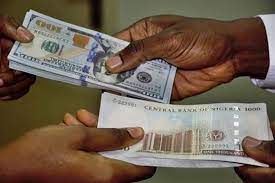
Projecting the naira at between N1,450 and N1,500 with” some luck,” he stressed that external reserves must be viewed again rising debt obligations, saving the recent uptick was largely tied to Eurobond inflows.
Beyond market metrics, Rewane emphasized the urgent need to “build an economy that works for Nigerians,” noting that diaspora remittances remain a stabiliising force but could wealen as global labour markets adjust to AI-driven disruptions.
He added that Nigeria’s revised GDP of $250 billion still makes the government’s ambition of a $1 trillion economy by 2030 unrealistic without a increase in productivity, investment and security.
Group Managing Director, Parthian Pension, Oluseye Olusoga, said these concerns, warning that Nigeria risks losing competitiveness within the African Continental Free Trade Area (AfCFTA) if the private sector continues to lag behind peers.
He said countries such as Togo and Benin were already leveraging AfCTA for industrial expansion and positioning themselves to capture value from Nigeria’s consumer base. “If we don’t fill the regional vacuum, others will. Investment follows security, and security is now our biggest economic variable, he added.
On the fiscal front, the Chairman of the Presidential Fiscla Policy and Tax Reforms Committee, Taiwo Oyedele, highlighted sweeping tax changes expected from January, including a cut in corporate tax from 30 to 25 per cent, zero corporate tax for small businesses below N100 million turnover, and reduced PAYE obligations for 98 per cent of workers.
He said essential items such as food,rent,transportation, health and education would move to zero-per-cent VAT with full input credit a shift expecte to raise disposable income for 90 per cent of Nigerians and encourage long-term capital inflows.
Despite applauding macro gains such as a stronger current account position and narrowing FX gaps, Chairperson of the African Finance Corporation, Mrs. Ireti Samuel-Ogbu, cautioned that the reforms had deepened inequality, with 61 per cent of Nigerians now classified as multidimensionally poor.
She urged government to expand social-protection programmes to ensure broad-based participation in the economy, warning that rising food inflation disproportionately hits the poor and financially excluded.
With the pension industry now permitted to increase infrastructure investments from 10 to 21 per cent across all funds, Parthian Pension, Managing Director, Olufemi Odukoya, said the reforms could unlock a significant pool of long-term financing for national development but only if security and policy consistency are sustained.
The conference concluded with a consensus that Nigeria stands at a rare moment where tax reforms, capital-market expansion and regional integration could align to stimulate inclusive growth but only if policymakers confront insecurity, protect vulnerable households and broaden private-sector participation in the reform agenda.