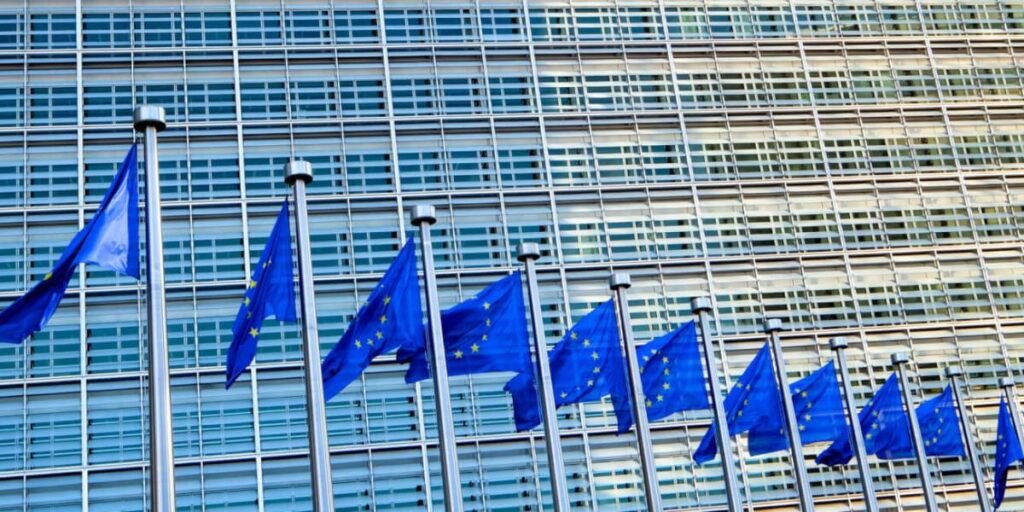
The European Union has officially removed Nigeria from its list of high-risk jurisdictions for money laundering and terrorism financing, alongside South Africa and four other African countries.
This is according to a statement published on the European Commission’s website.
The move follows Nigeria’s successful removal from the Financial Action Task Force (FATF) greylist in 2025 and is expected to ease cross-border transactions, reduce compliance costs, and improve investor confidence.
Under the new decision, enhanced due diligence requirements applied to transactions involving Nigeria and other delisted countries will be lifted from January 29, 2026, subject to procedural approval by the European Parliament and the Council.
According to the European Commission, the update reflects decisions taken by the FATF at its June and October 2025 plenaries, where several countries were removed from the list of “Jurisdictions under Increased Monitoring,” commonly referred to as the greylist.
“The EU has added new third-country jurisdictions to the list (Bolivia and the British Virgin Islands) and delisted a number of others (Burkina Faso, Mali, Mozambique, Nigeria, South Africa and Tanzania),” it stated.
EU entities covered by the bloc’s anti-money laundering (AML) framework are required to apply enhanced vigilance when dealing with countries on the list.
With Nigeria’s removal, such heightened scrutiny will no longer apply to Nigerian-related transactions within the EU once the regulation enters into force.
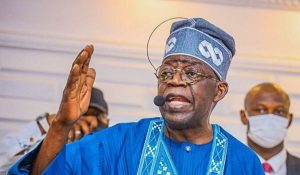
While the Presidency has yet to issue an official statement, the Minister of State for Finance, Dr. Doris Uzoka-Anite, in a post on X described the development as a big win for Nigeria.
“Big win for Nigeria! Removed from EU’s financial ‘high-risk’
“Congrats to President @officialABAT on this achievement. As Minister of State for Finance, I’m proud of this boost to trade and investor confidence,” she posted.
Why this matters
Nigeria’s removal from the EU high-risk list has significant economic and financial implications. Being classified as a high-risk jurisdiction often leads to higher transaction costs, delayed payments, restricted correspondent banking relationships, and reduced foreign investment.
With enhanced due diligence requirements lifted, Nigerian banks, exporters, fintechs, and businesses operating with European partners are expected to face fewer compliance hurdles.
This could improve trade flows, ease remittances, and support capital inflows at a time when Nigeria is seeking to attract foreign investment and deepen integration into global financial markets.
The decision also reinforces Nigeria’s credibility in ongoing efforts to reform its financial system and combat illicit financial flows.
Nigeria was removed from the FATF greylist in October last year after implementing a series of reforms aimed at strengthening its anti-money laundering and counter-terrorism financing (AML/CFT) regime.
The country was removed from the list alongside South Africa, Burkina Faso, and Mozambique after their governments stepped up efforts to combat money laundering and terrorist financing.
South Africa and Nigeria were added to the grey list in February 2023, while Mozambique was added in October 2022, and Burkina Faso was originally designated in February 2021.