
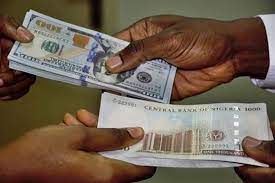
The naira ended January 2026 on a stronger footing in the official foreign exchange market, closing at N1,391 to the dollar, up from its opening rate of N1,431/$ at the start of the month.
Data from the Central Bank of Nigeria’s (CBN) website shows the currency largely traded below the N1,425/$ mark during January, reflecting stability amid improved liquidity conditions.
The performance builds on gains recorded at the end of 2025, signaling a cautiously optimistic start to 2026 for Nigeria’s currency.
The naira’s month-on-month and year-on-year performance underscores the currency’s gradual recovery.
The naira closed trading on December 31, 2025, at N1,429/$1, representing a 7.4% appreciation from the N1,535/$1 recorded on the final trading day of 2024.
Compared with January 2025, when the naira ended at N1,475/$, January 2026’s outcome marks a notable year-on-year gain.
In the parallel (black) market, the naira also strengthened, closing at N1,453/$ from an opening rate of N1,474/$.
The narrowing gap between official and parallel market rates indicates easing speculative pressure and improved confidence in the foreign exchange market.
Several factors supported the naira’s performance in January, including external reserves growth and market interventions.
Nigeria’s foreign exchange reserves rose from $45.56 billion at the start of the month to $46.11 billion by the end of January.
ORIMIXTIMES reports that external reserves have crossed the $46 billion mark for the first time in about eight years, highlighting the steady accretion in reserve levels since 2025.
The reserve increase gives the Central Bank of Nigeria (CBN) greater capacity to meet FX demand and intervene in the market when necessary.
While challenges remain, such as inflationary pressures and potential external shocks, the data suggest a cautiously positive outlook for the naira in the early part of 2026.
The January FX market performance signals early stability for Nigeria’s currency as monetary authorities continue to intervene strategically.
Economic analysts and Bureau De Change (BDC) operators say the naira could record stronger gains and improved stability in 2026, supported by rising foreign exchange (FX) inflows.
They also see sustained monetary tightening and ongoing structural reforms in Nigeria’s economy as factors that will drive the Nigerian currency this year.
Market experts identify the restoration of confidence in Nigeria’s FX market as a major factor underpinning the naira’s outlook.
They said reforms introduced by the CBN including the unification of exchange rate windows, improved transparency in FX allocation, and tighter oversight of market operators—have helped reduce arbitrage opportunities that previously weakened the currency.
BDC operators say these changes have narrowed the gap between official and parallel market rates, significantly dampening speculative dollar demand.
In its 2026 macroeconomic outlook, CardinalStone projected that naira could strengthen to between N1,350 and N1,450 per dollar in 2026.
The January outcome indicates that policy interventions and reserve growth are helping to restore confidence in Nigeria’s foreign exchange market, laying the groundwork for a potentially steadier 2026.