By Emmanuel Enitan
Nigeria’s vast informal economy, employing the overwhelming majority of the country’s workers, is facing billions of naira in potential losses as millions of traders, artisans, farmers, transport operators and small business owners continue to operate without insurance protection.
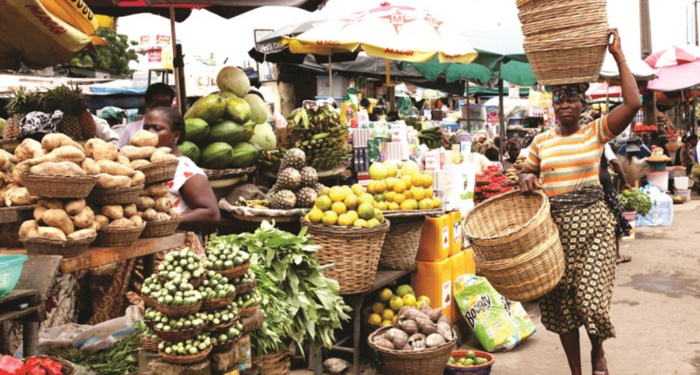
From crowded markets in Lagos to roadside workshops and small farms across the country, business owners who invest their life savings in their enterprises are often left to bear the full cost when fire, flood, theft, accidents or other disasters strike.
The irony is stark: while insurance companies are raising billions of naira in fresh capital to strengthen their balance sheets and meet new regulatory requirements, a huge segment of the economy remains largely outside the formal insurance market.
Nigeria’s informal employment rate stood at about 93 per cent as of June 2024, according to data from the National Bureau of Statistics cited by the European Union Agency for Asylum, underscoring the enormous size of the market available to insurers.
Yet insurance penetration remains below one per cent of Gross Domestic Product, highlighting the wide gap between the size of economic activity and the proportion protected by insurance.
For traders like Chibuke Nwosu, insurance has failed to earn sufficient confidence to justify putting money into premiums.
Nwosu, who operates two stores at Alaba International Market, Lagos, told Orimix Times that his distrust of insurance was influenced by his family’s experience following the death of his brother, who had reportedly paid life insurance premiums but whose family did not receive the expected benefit.
“Any kind of insurance doesn’t work in Nigeria,” he said, expressing concern about what he described as intermediaries and demands for unofficial payments in the claims process.
For Peter Onyemaechi, another trader, the issue is largely affordability.
With limited working capital, he told Orimix Times that he preferred to put available funds into purchasing stock and sustaining his business rather than paying insurance premiums.
His calculation reflects the dilemma confronting millions of informal operators whose businesses depend on daily or weekly cash flow.
For them, every naira committed to insurance is a naira that could otherwise be used to replenish stock, pay workers, transport goods or meet household expenses.
The problem, however, is that the decision to remain uninsured can become extremely costly when disaster strikes.
Tajudeen Olanipekun, a wholesale electronics trader at Lagos Island Market, said his experience with insurance also raised concerns about claims.
Olanipekun told Orimix Times that he had previously insured his goods but became concerned about the possibility of a dispute over responsibility where a fire originating from a neighbouring shop spread to his premises.
Such concerns illustrate the broader challenge confronting the industry: getting Nigerians to see insurance not merely as another expense, but as a financial instrument capable of preserving their businesses when their biggest risks materialise.
Industry stakeholders acknowledge that the problem is not entirely the fault of consumers.
The Director-General of the Nigerian Insurers Association, Bola Odukale, has identified poor awareness, low financial literacy, irregular incomes, inadequate distribution channels and the failure to sufficiently customise products for low-income customers among the factors limiting insurance penetration.
She has also stressed that valid claims should not be unnecessarily delayed or denied, while explaining that claims must be assessed based on the terms of the policy and the risks actually covered.
This distinction is critical because the perception of claims failure has become one of the biggest barriers to insurance adoption.
For a trader whose shop represents years of savings, paying premiums only becomes meaningful when the insurer is seen to stand behind the promise contained in the policy.
Former Commissioner for Insurance, Sunday Thomas, has similarly argued that insurers must move beyond conventional approaches if the sector is to reach the millions of Nigerians operating outside the formal economy.
He has advocated greater use of technology, simplified processes and stronger financial literacy campaigns to take insurance closer to underserved communities.
The size of the opportunity is enormous.
Olatunde Amolegbe, Managing Director of Arthur Stevens Asset Management Limited, has estimated Nigeria’s informal workforce at about 70 million, arguing that excluding such a huge population from formal financial protection represents a major economic loss.
The challenge is that the informal economy does not operate like the corporate sector.
A salaried worker may be able to commit a fixed amount to insurance every month. A market trader may have strong sales during festive periods and weak sales at other times. An artisan may receive several jobs in one month and none the next. A farmer may only earn after harvest.
Insurance products designed around fixed annual payments, extensive documentation and conventional distribution structures can therefore struggle to fit these realities.
This is where microinsurance is expected to become increasingly important.
Microinsurance products, when properly designed, can provide affordable protection against specific risks while allowing customers to pay smaller premiums.
Technology can also reduce the cost of distribution by allowing insurers to reach customers through mobile phones, digital platforms, agents and partnerships with market associations, cooperatives, fintechs and other organisations already trusted by informal operators.
But industry experts warn that product innovation alone will not solve the problem.
The sector must also address its credibility deficit.
A trader who watches a neighbour lose an entire shop to fire and struggle to receive compensation is unlikely to rush to buy a policy. Conversely, a successful claim paid quickly and transparently can persuade an entire market that insurance works.
This makes claims settlement one of the most important marketing tools available to insurers seeking to penetrate the informal economy.
The economic cost of remaining uninsured is already visible.
When a market fire destroys a trader’s stock, the loss does not stop at the shop. The trader may lose employees, suppliers lose a customer, banks and informal lenders may lose borrowers, and families dependent on the business suddenly lose income.
Where thousands of businesses operate without insurance, these individual losses can accumulate into a significant drag on economic activity.
This is particularly worrying in a country where small and informal enterprises provide employment and income for millions of households.
NAICOM has increasingly placed financial inclusion, microinsurance, Takaful, innovation and wider market penetration at the centre of its strategy for expanding insurance coverage.
The regulator’s push is coming at a significant moment for the industry.
Following the recapitalisation exercise, insurers have been required to demonstrate stronger financial capacity. The next test for the sector is whether that stronger capital base will translate into a broader insurance market.
The industry cannot afford to build bigger balance sheets while leaving the largest segment of the economy outside the protection system.
For insurers, the informal economy represents both a challenge and an opportunity.
It is a difficult market to serve because of its dispersed nature, irregular incomes and limited documentation. But it is also the largest pool of potential customers available to the industry.
The question is whether insurers can develop products that a roadside mechanic, market trader, farmer, artisan or transport operator can afford, understand and trust.
For the millions operating in Nigeria’s informal economy, the issue is no longer simply whether they can afford insurance.
It is whether they can afford not to have it.
And for the insurance industry, the bigger question is whether it can convince them that when disaster strikes, the promise on the policy document will translate into money in their hands.