Agric sector attracts $167.25m capital inflows in 2025, signals renewed investor interest
By David Akinmola
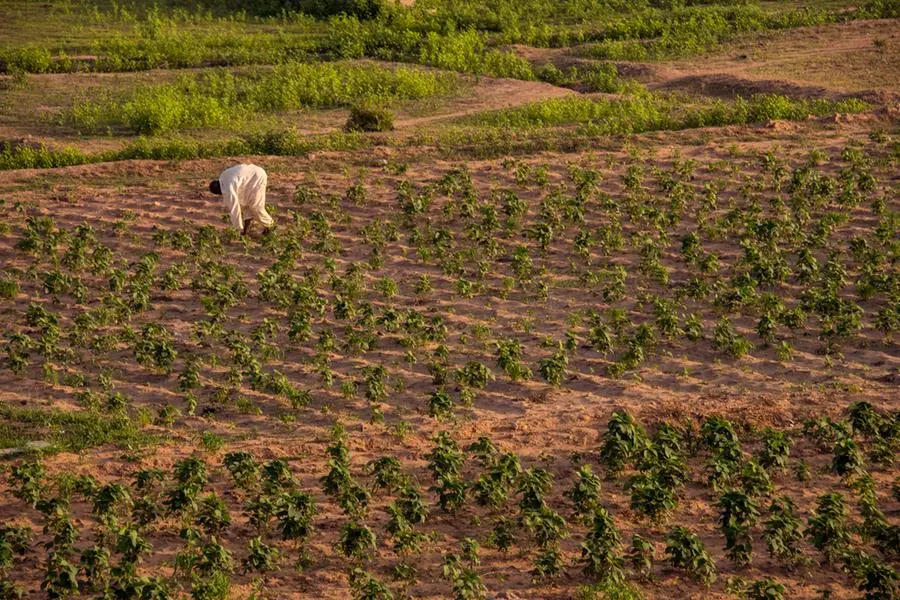
Nigeria’s agricultural sector attracted $167.25 million in capital inflows in 2025, reflecting renewed investor interest in the country’s agribusiness value chain amid efforts to diversify the economy away from oil.
Industry data indicate that the inflows, though modest relative to the sector’s vast potential, underscore growing confidence in agriculture as a viable investment destination, particularly in areas such as food production, processing, and logistics.
Analysts say the development aligns with ongoing policy efforts by the Federal Government to boost food security, enhance local production, and reduce dependence on imports.
“This shows that agriculture is gradually gaining attention from investors, but the scale is still far below what is required,” a Lagos-based economist said. “The sector needs significantly higher investment to unlock its full potential.”
From an industry perspective, stakeholders note that agriculture remains one of Nigeria’s most underfunded sectors despite its critical role in employment and contribution to Gross Domestic Product (GDP).
They argue that improved access to finance, infrastructure development, and policy consistency are essential to sustaining investor interest and scaling inflows.
Experts also point to increasing opportunities in agro-processing and value addition, where returns are considered more attractive compared to primary production.
“Investors are beginning to see value beyond farming into processing, storage, and distribution, where margins are higher and risks are better managed,” an agribusiness consultant noted.
However, challenges such as insecurity in farming communities, climate risks, poor infrastructure, and limited access to credit continue to constrain large-scale investments.
Stakeholders warn that without addressing these structural issues, capital inflows into the sector may remain below expectations.
They also emphasise the need for risk mitigation tools, including agricultural insurance and improved financing models, to protect investments and encourage participation from both local and foreign investors.
Despite these concerns, analysts maintain that Nigeria’s large domestic market, favourable climate conditions, and growing demand for food position the sector as a long-term investment frontier.
The inflow of $167.25 million is therefore seen as a positive signal, but one that highlights the urgency of scaling investments to transform agriculture into a major driver of economic growth and export earnings.
As the government continues to prioritise diversification, stakeholders insist that sustained reforms and targeted incentives will be critical to unlocking larger capital flows into the sector in the years ahead.