The number of billionaires worldwide has reached a record 3,000 in 2025.
This is according to Oxfam report published recently.
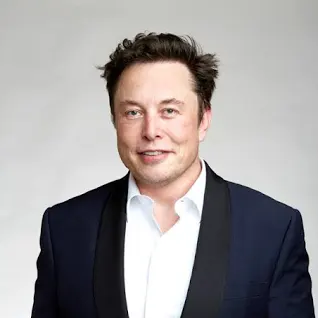
The report stated that Elon Musk became the richest person in history for the first time with $500 billion networth.
Billionaires continue to acquire wealth at rates far exceeding global averages. Their combined assets now outstrip those of billions of ordinary people, while many governments struggle to address systemic poverty and unequal access to resources. The rise of extreme wealth has become a flashpoint for debates on fairness, social justice, and the influence of money in politics.
Part of the report stated, “the growth in the billionaire population is accelerating faster than ever before. Over the past several decades, the number of billionaires has tripled, with their wealth expanding at rates well above the global average.”
Studies indicate that in some countries, inequality is worsening more rapidly than in the preceding four years.
The 12 richest individuals now control more than $500 billion, an amount greater than the combined wealth of the poorest half of humanity.
Globally, billionaires are 4000 times more likely to hold enough wealth to overshadow the political and economic power of millions of ordinary citizens.
Backstory
The accumulation of extreme wealth has long been linked to political influence and control. In countries like the United States, billionaires have used their wealth to shape policies, secure political allies, and influence public opinion. Legal and social structures often fail to hold the ultra-rich accountable, allowing them to maintain impunity and further consolidate their power.
History shows that the concentration of wealth in the hands of a few can erode civil and political rights. Protests are suppressed, dissent is marginalized, and democratic processes are undermined when financial power dominates political systems.
Critics argue that such extreme inequality is inimical to fairness, social progress, and the futures of younger generations.
As the late Justice Brandeis observed, democracy cannot coexist with wealth concentrated in the hands of a few; extreme economic power threatens both governance and equality.
What you should know
The rise of billionaires in 2025 is not just a matter of numbers but a reflection of how wealth shapes societies and politics. Wealthy individuals are increasingly able to influence laws, elections, and economic policy to protect and expand their interests.
Economic disparity continues to grow as ordinary citizens face rising costs of living, limited access to opportunity, and shrinking social mobility. Authoritarian tendencies are emerging in countries where economic power directly translates into political influence. Globally, societies face urgent challenges in balancing economic growth with fairness, justice, and the long-term stability of democratic systems.
The record number of billionaires in 2025 illustrates a world where wealth can dictate political power, shape economies, and intensify inequality, raising critical questions about the future of democracy and governance worldwide.