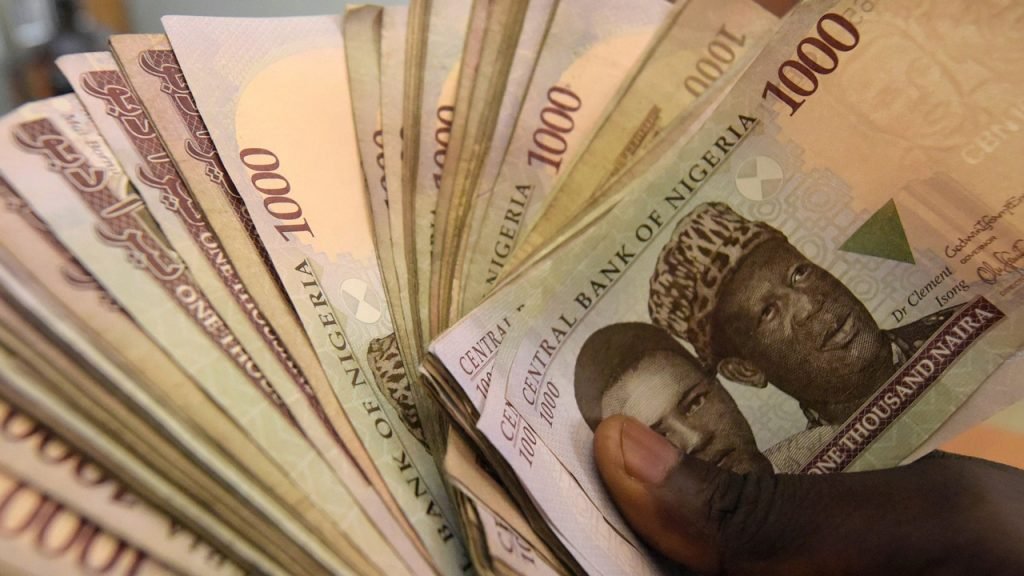
The **Nigerian naira slid to N1,466.5 to the U.S. dollar on Friday, marking its weakest official exchange rate since October 21, 2025 and extending a week-long slide in the foreign exchange market.
The closing rate at the Nigerian Foreign Exchange Market (official market) reflected persistent depreciation across five consecutive trading sessions. Beginning the week at around N1,454/$1, the domestic currency gradually weakened before settling at N1,466.5/$1 on Friday — a level not seen in roughly two months.
Analysts say the renewed pressure on the naira underscores structural challenges in Nigeria’s currency market, particularly amid sustained demand for dollars and cautious supply conditions. Despite efforts by the Central Bank of Nigeria (CBN) to stabilise the market, the week’s movements suggest that underlying imbalances persist.
The currency’s slide comes at a sensitive time for the national economy. On the same day that the naira recorded its lowest weekly close, President Bola Tinubu presented the federal government’s 2026 budget to the National Assembly, projecting an exchange rate of N1,400/$1 in planning assumptions — well below current market levels.
Economists say this gap between budget assumptions and market reality highlights ongoing uncertainties in Nigeria’s fiscal and external sectors, especially given the country’s reliance on oil exports and the global volatility of energy prices.
For businesses and ordinary Nigerians, the depreciation can have immediate consequences: imported goods and services may become costlier, inflationary pressures could intensify, and foreign-denominated obligations may strain corporate balance sheets. Investors also watch currency momentum closely, as exchange-rate expectations can influence capital flows into and out of the country’s markets.
While the naira has shown bouts of relative stability in recent months, recent movements — culminating in the N1,466.5/$1 close remind market watchers that Nigeria’s currency remains sensitive to both domestic policy signals and global financial conditions.