
Nigeria may struggle to fully capitalise on rising oil prices triggered by escalating tensions in the Middle East, as global financial volatility threatens to erode foreign exchange (FX) gains.
This is according to a policy brief by the Centre for the Promotion of Private Enterprise (CPPE).
The conflict involving Iran, the United States, and Israel has heightened fears of disruption in the Strait of Hormuz, a vital corridor through which nearly 20 percent of global crude supply passes daily.
Any instability in this passage reverberates across oil prices, shipping costs, and global supply chains.
The report says for Nigeria, an oil-dependent economy where crude accounts for more than 85 percent of export earnings and about half of government revenue, the implications are profound.
“Given Nigeria’s relatively shallow capital market and sensitivity to foreign portfolio investment, volatility in global financial conditions could offset part of the FX gains from higher oil prices,” the Centre for the Promotion of Private Enterprise (CPPE) warned.
According to the report, geopolitical shocks in the Middle East often push crude prices up sharply, sometimes by $5–$15 per barrel within days.
“Nigeria could benefit through higher export receipts, stronger reserves, and increased government allocations.
“Yet, production remains constrained at 1.4–1.6 million barrels per day, undermined by theft, vandalism, and underinvestment. Without tackling these bottlenecks, Nigeria risks missing out on the full windfall.”
The strikes follow a joint military operation launched early Saturday by the United States and Israel, which they described as targeting perceived security threats from Iran.
Israeli Prime Minister Benjamin Netanyahu and US President Donald Trump released separate video statements defending the action and suggesting broader objectives that could include political change in Tehran.
Iran condemned the attacks as a violation of its sovereignty and vowed retaliation.
The escalation comes amid diplomatic efforts previously mediated by Oman, including a recent round of nuclear talks held in Geneva on Thursday.
According to CPPE, higher oil receipts typically ease pressure on the naira by boosting FX liquidity, but global risk aversion often drives investors toward safe-haven assets, triggering portfolio outflows from emerging markets.
Nigeria’s reliance on foreign portfolio inflows makes it particularly vulnerable. The net effect on the exchange rate will hinge on whether stronger oil inflows outweigh potential capital reversals, the report added.
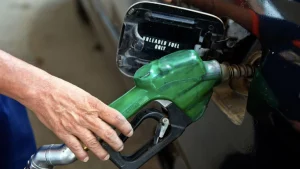
“Domestic welfare risks loom large. With deregulated fuel pricing, higher international crude costs translate directly into rising petrol, diesel, and aviation fuel prices. This feeds into transportation, food distribution, and manufacturing costs, intensifying inflationary pressures.
CPPE cautioned: “While government revenues may rise, household welfare could deteriorate—creating a divergence between fiscal gains and social outcomes.”
It added that Nigeria’s capital market is expected to see mixed impacts: oil and gas equities may benefit, while consumer goods and manufacturing sectors face margin compression.
CPPE urged fiscal prudence, warning against the historic cycle of spending booms followed by fiscal stress.
Recommendations include saving part of the oil windfall, accelerating refining capacity, and deploying targeted social protection.
“Nigeria’s heavy reliance on oil exports amplifies its exposure, underscoring the urgency of economic diversification.”
On Saturday, Iran launched retaliatory missile strikes against American military installations across the Middle East, with a reported direct hit on the US Navy’s Fifth Fleet headquarters in Bahrain.
Bahrain’s National Communication Centre confirmed on Saturday that a missile struck a service facility at Naval Support Activity Bahrain in the Juffair/Mina Salman port area.
The escalation comes hours after the United States and Israel carried out coordinated strikes on targets in Tehran and other parts of Iran.