Nigeria’s 2026 proposed Federal Government budget outlines a cumulative capital allocation of about N4.23 trillion for roughly 50 major projects across key sectors of the economy across eight federal ministries.
This is according to figures compiled by BudgIT Nigeria and published on its verified official X handle on Saturday, February 7, 2026.
The figures are drawn from an aggregation of capital expenditure allocations contained in the 2026 budget proposal and its supporting documents.
The scale and spread of the allocations point to a deliberate strategy that spreads large-ticket investments across infrastructure and human capital, a central theme of the 2026 fiscal year.
The 2026 budget data indicate a capital-heavy spending strategy, with more than N4.23 trillion cumulatively allocated to about 50 projects. The numbers show that infrastructure—particularly power and roads—dominates capital priorities, while social sectors also received meaningful allocations.
Power, works, and transport-related projects account for the bulk of capital allocations, reflecting a focus on electricity reliability, transmission capacity, and nationwide connectivity.
Agriculture, education, health, and water resources feature as targeted social investments aimed at supporting food security and human capital development.
Allocations are spread across multiple ministries and geopolitical zones, suggesting an attempt to balance regional development with sectoral priorities.
Highlight of allocations by ministry:
- Ministry of Works: N2.5 trillion
- Ministry of Power: N894.16 billion
- Ministry of Transport: N316.63 billion
- Ministry of Agriculture and Food Security: N175.84 billion
- Ministry of Education: N157 billion
- Ministry of Health and Social Welfare: N133.29 billion
- Ministry of Water Resources and Sanitation: N47.25 billion
- Ministry of Humanitarian Affairs and Poverty Alleviation: N61.6 billion
- Cumulative total across ministries: N4.23 trillion
Overall, the data point to a broad-based capital programme designed to address long-standing infrastructure gaps while complementing them with social investments.
A closer look at the project list shows that power and road infrastructure alone account for more than N3.4 trillion of the cumulative allocation, making them the clear anchors of the 2026 capital budget. The Ministry of Works and the Ministry of Power together absorb the largest share of proposed spending.
The Ministry of Works is allocated about N2.5 trillion, covering new and ongoing road construction, strategic corridors, and counterpart funding for large infrastructure projects.
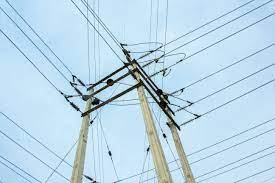
The Ministry of Power receives N894.16 billion, spread across transmission expansion, renewable energy programmes, rural electrification, and grid recovery initiatives.
Other sectors deepen the capital allocation, including transport projects such as urban rail and national bus terminals, as well as agriculture-focused investments like Special Agro-Industrial Processing Zones.
While individual projects vary in size, their combined value pushes total capital commitments firmly into multi-trillion-naira territory.
Taken individually, many of the projects in the 2026 budget may appear modest, but collectively they represent one of the most ambitious capital investment programmes in recent years.
The breadth of sectors covered suggests an effort to synchronise physical infrastructure with social development rather than pursue isolated interventions.
For investors, the cumulative scale points to potential opportunities in construction, energy, transport services, agriculture processing, and public-private partnerships.
For the broader economy, improved roads and power supply could ease cost pressures on businesses and support productivity growth.
However, the effectiveness of this strategy will depend heavily on execution, funding sustainability, and the government’s ability to deliver projects on schedule.
Nigeria’s proposed 2026 budget of N58.18 trillion with over N23 trillion deficit, prioritises infrastructure development while maintaining sizeable allocations to recurrent expenditure, including personnel costs and debt servicing.
Sectoral allocations show a clear tilt toward Works, Power, Transport, Defence, Education, Health, and Social Intervention programmes.
Works and power dominate capital spending, jointly absorbing N3.4 trillion naira for road construction, electricity transmission, and energy access.
Education and health receive increased allocations aimed at improving human capital outcomes, while defence and internal security remain elevated amid ongoing security challenges.