
Despite renewed investments and signs of recovery over the past year, Nigeria’s rail sector continues to grapple with deep-seated operational and funding gaps that limit its expansion, industry experts have said, warning that progress will remain fragile without sustained reforms and financing.
The Nigerian Railway Corporation (NRC) in the last few years has been shaped by a mix of positive gains and negative challenges.
The corporation until recently was faced with operational constraints as its rail network continued to struggle to remain relevant with several sections of the system experiencing service disruptions and derailments, raising concerns about maintenance standards and safety oversight.
Apart from this, the continuous vandalism of its equipment like bolts, clips and signaling hardware among others and security threats remain some of the major tests confronting its growth and almost nullifying the huge investments the Federal Government had expended on it in recent years.
Its performance and expansion were also at a time, threatened by chronic underfunding with paltry inconsistent budgetary allocations from the Federal Government, limiting its ability to carry out planned maintenance, procure critical equipment or modernise existing infrastructure.
Despite the recent government spending of about $4 billion on infrastructure development in the last decade, its revenue generation was insignificant to the huge spending, thereby raising the question of necessity for the corporation.
However, the government of President Bola Tinubu on inauguration in 2023, promised to address the challenges confronting the transport modes in the country – rail, maritime, road and aviation.
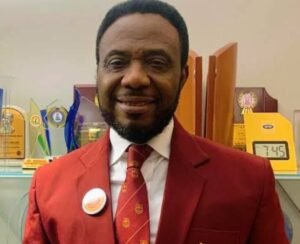
In a bid to change the fortune of the NRC, in January 2025, the Federal Government appointed Dr. Kayode Opeifa as the new Managing Director of NRC with a sole mandate to improve the fortune of the railways and increase its Internally Generated Revenue (IGR).
Before his appointment, Opeifa was the Federal Capital Territory (FCT) Mandate Secretary for Transportation and also a member of the immediate NRC Governing Board, which indicated that he was coming to a familiar terrain.
In his acceptance speech, Opeifa promised to represent and be the face of the vision of the government as summarised in the Renewed Hope Agenda of Mr. President, and ensure that the NRC adequately fulfils its responsibility to the Nigerian people.
Opeifa also assured that as the new Chief Executive Officer (CEO) of the railways, he would add value to an existing vision by ensuring the NRC adequately fulfilled its responsibility to the Nigerian people under the Renewed Hope Agenda programmes of the president.
Besides, he vowed to work in harmony with all staff of the NRC to deepen operations of the national rail system for the socio-economic development of the country and improve their welfare package, which he said was critical to sustainability of the sector.
In his commitment, he also promised to prioritise the security of lives and property, work with the supervising ministry, the Ministry of Transportation with the entire national security apparatus to ensure the nation’s resources, operations, infrastructure and customers were safe and secured, while also modernising and expanding the rail infrastructure.
He said: “Let me state clearly that today, as we gather here, I am reminded of the critical role the Nigerian Railway Corporation plays in driving economic growth, promoting national integration, and improving the lives of our citizens. We will work together tirelessly to ensure the organization achieves its mandate and exceed expectations.
“Our collective mission would be one of efficiency, safety, and customer satisfaction driven by passion for excellence. We will prioritise the completion of ongoing projects, modernize our infrastructure, and expand our services to meet the growing demands of our population. This mission will be tailored towards a robust transformation of the rail sector in Nigeria into a world-class, efficient, and safe mode of transportation.
“This mission is an integral part of the Renewed Hope Agenda of the president and the 25-year Strategic Rail Modernization Plan, which aims to create an enviable rail transport network that connects every state and major cities in Nigeria.”
A year after his appointment and promises, transport experts said the railways in Nigeria had witnessed some ups and downs especially with disruptions to its services, which made the railways unable to fully impact the economy in terms of haulage and passenger movements.
They, however, commended Opeifa for sustaining the corporation and increasing its IGR within the period.
Stakeholders’ verdicts
Speaking on the development the Managing Director’s one year in office, the President, Nigeria Union of Railway Workers (NUR), Comrade Innocent Ajiji , described his performance as people-focused, reform-driven and largely impressive despite deep structural constraints.
According to him, Opeifa’s leadership had brought renewed motivation to railway workers, improved labour relations and achieved modest gains in revenue.
He explained that unlike previous administrations, Opeifa had personally visited railway locations across the country, holding face-to-face interactions with staff to understand their challenges and take action.
He said: “Since he assumed office about a year ago, he has improved the relationship between management and workers, especially in terms of welfare. He has a very good human relationship with workers.”
Ajiji cited the prompt response to rail incidents in Abuja and on the Warri–Itakpe corridor as examples of the helmsman’s hands-on leadership, noting that Opeifa stayed on-site during repair works, ensured workers’ allowances were paid instantly and significantly increased their daily field allowances.
In terms of financial performance, according to Ajiji, NRC’s IGR for most parts of 2025 improved by about 30 to 40 per cent, but regretted that recent operational setbacks caused by equipment shortages led to a drop of revenue.
Ajiji, however, mentioned the lack of locomotives, coaches, wagons and spare parts as some of the challenges confronting the corporation at the moment, but said these factors were outside the control of the management.
For instance, he said that train frequencies on key routes such as Abuja-Kaduna and Warri-Itakpe corridors had dropped significantly, thereby affecting revenue and service capacity.
“The man’s hands are tied. He may want to run more trains, but the tools are not there. Provision of locomotives and equipment is the responsibility of the Federal Government,” Ajiji said.
Looking ahead to the next one year, the NUR President expressed optimism that with adequate government support, rail operations could witness a major turnaround.
He called on the Federal government to align support for the railway sector with the Renewed Hope Agenda, noting that a well-equipped and motivated NRC would be capable of generating sufficient revenue to improve workers’ welfare and reduce dependence on government subvention.
Also, ’Segun Esan, rail transport analyst, described Opeifa as the right man for the job, based on his experience as a former board member of the corporation.
Like Ajiji, Esan said since assuming office, Opeifa had visited various stations of the corporation and had direct engagement with workers, stressing that effective railway administration required constant presence on the field rather than operating solely from the office.
He, however, urged him to prioritise track rehabilitation, freight haulage and stronger technical oversight to reposition the railway as a backbone of Nigeria’s transport economy.
Esan expressed that the coming year would be critical in determining whether Opeifa could etch his name in gold in the industry, adding that the NRC boss must be decisive and deeply involved in core technical departments.
He mentioned civil, mechanical and electrical engineering departments as the epicentre of the rail transport industry, urging him not to leave these areas entirely in the hands of others.
On infrastructure, Esan urged Opeifa to make the rehabilitation of the narrow-gauge network a major priority, describing it as the most extensive, but most neglected rail asset in the country.
He noted that Nigeria has over 3,500km of narrow-gauge lines, compared to the few kilometers standard gauge currently in operation nationwide.
Esan also cautioned against an over-concentration on passenger services alone, noting that freight operations offer far greater revenue potential to the corporation.
“Passenger trains are like running political trains because when people travel on the trains, they feel the good impact and they share their experiences all across and everywhere.
“But when you look at what a passenger train brings in as revenue compared to, running goods train, it is like comparing a cup of sand to a trailer of sand.
“So, he should, pay more attention and consider the possibility of bringing up, freight haulage, even if it is within Lagos up to Kaduna or even Kano, but that will have to be a function of a very healthy narrow gauge system because the standard gauge system we are talking about hasn’t gotten so well spread like the narrow gauge,” he added.
Besides, Esan expressed optimism that the NRC could begin its journey back to relevance within the next year, provided Opeifa leverages his understanding of the industry and maintains strong engagement with government and stakeholders.
Besides, the Professor of Transport Planning and Policy at the Lagos State University (LASU), Samuel Odewumi, said that the first year of Opeifa as Managing Director of the NRC, had been defined less by fanfare and more by a deliberate effort to restore order, confidence and strategic direction in the nation’s rail sector.
Odewumi who is also the Acting Vice-Chancellor of the University of Uyo, Akwa Ibom States, said Opeifa’s initial year in office was largely about “bringing back order” and “laying the foundation for real reform rather than make-believe gains” in the railway industry.
He noted that for an industry long plagued by safety concerns and public scepticism, the renewed emphasis on the integrity of rail infrastructure and safety measures had been significant in recent times.
He said: “For a sector that has perennially battled safety fears, the increased focus on rail integrity and contingent safety measures has contributed to restoring passenger confidence, especially along critical freight corridors where standard-gauge operations dominate.”
Despite the modest gains, the transport expert acknowledged that the NRC continued to face deep-rooted challenges.
He listed budgetary constraints, ageing infrastructure, occasional derailments and low freight penetration as some of the persistent challenges that still threaten the pace of reform.
Looking ahead, Odewumi said the coming year would be critical for the NRC leadership, urging a stronger push against rail track theft, ticketing racketeering and the need for more visible expansion across the network.
“Challenges remain substantial. However, the past year should be seen as a necessary phase of laying the groundwork upon which more impactful reforms can be built.
“In the next phase, there must be decisive action against track vandalism and ticketing malpractices, alongside a push for impactful expansion,” he said.
Quote: “But when you look at what a passenger train brings in as revenue compared to, running goods train, it is like comparing a cup of sand to a trailer of sand.”