
Renewed activities surrounding Sunday Adeyemo, popularly known as Sunday Igboho, have once again brought the agitation for a Yoruba nation into national discourse, highlighting both the resilience of the movement and the challenges confronting its realisation.
Igboho, a prominent figure in the self-determination campaign in the South-West, has remained vocal about the call for an independent Yoruba nation, citing concerns over insecurity, governance deficits and perceived marginalisation. His re-emergence in public conversations has, however, sparked mixed reactions among stakeholders, with some viewing the agitation as a legitimate expression of democratic rights, while others warn of its implications for national unity.
The Yoruba nation movement, driven by various groups and activists, seeks greater autonomy or outright independence for the South-West region. Proponents argue that restructuring or secession would allow the region to better harness its resources, strengthen security architecture and promote cultural identity.
However, the agitation continues to face significant legal, political and diplomatic hurdles. Analysts note that Nigeria’s constitutional framework does not provide for secession, making the realisation of such demands a complex and contentious process.
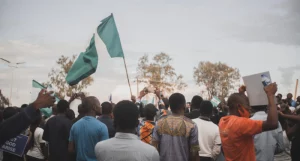
Security concerns also remain a major challenge. Government authorities have, in the past, clamped down on rallies and activities linked to the movement, citing threats to public order. This has often led to confrontations between security agencies and supporters, raising questions about the balance between civil liberties and national security.
In addition, there are divisions within the South-West itself. While some traditional rulers, youth groups and civil society organisations have expressed sympathy for the agitation, others advocate dialogue, restructuring and political reforms within a united Nigeria.
Observers further point to the need for cohesive leadership within the movement. The absence of a unified front among different pro-Yoruba nation groups has, at times, weakened coordination and messaging, limiting the movement’s ability to achieve concrete political outcomes.
Economic implications also feature prominently in the debate. Experts warn that any move toward secession could disrupt trade, investment and regional cooperation, while others argue that the South-West possesses the economic capacity to thrive independently if properly managed.
Despite these challenges, Igboho and his supporters insist that the agitation reflects deep-seated frustrations among sections of the population.
They continue to call for international attention and dialogue, maintaining that self-determination remains a fundamental right.
As the conversation evolves, stakeholders agree that addressing the underlying issues of insecurity, governance and equitable development will be critical in shaping the future of the Yoruba nation movement and its place within Nigeria’s broader political landscape.
Written by Bankole Orimisan-A journalist in Lagos