By Emmanuel Enitan
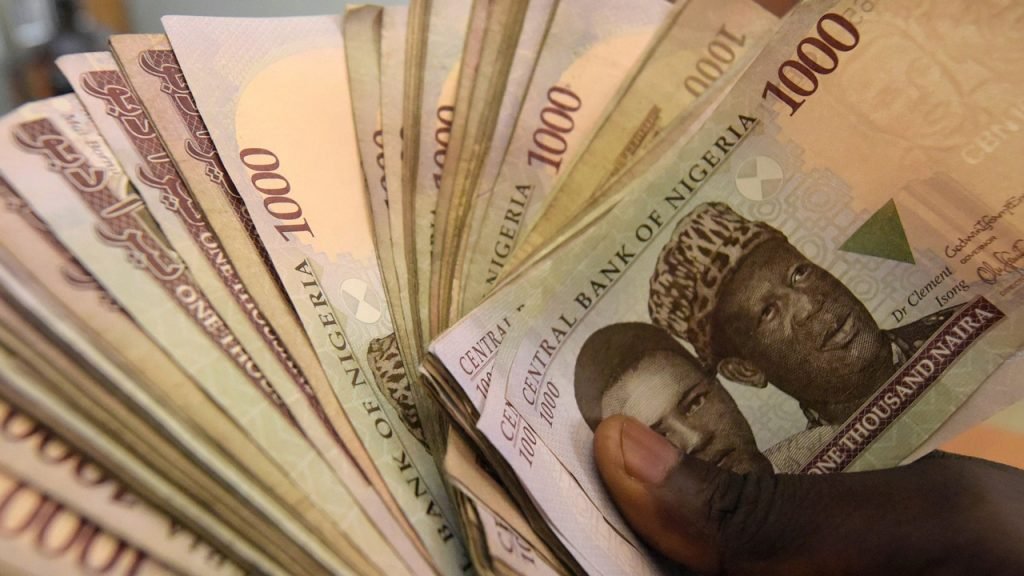
Cash held outside Nigeria’s banking system rose to N4.87 trillion in August, reversing a three-month downward trend and signalling renewed demand for physical currency despite the Central Bank of Nigeria’s (CBN) continued push for a cash-light economy.
Latest CBN monetary data showed that currency outside banks increased by N70.9 billion, representing 1.48 per cent growth, from N4.80 trillion in July to N4.87 trillion in August.
The increase came after cash outside banks fell consistently between May and July, declining from N5.19 trillion in May to N4.92 trillion in June and N4.80 trillion in July.
The three-month decline amounted to about N391.8 billion, making the August rebound a notable reversal in the trend.
Despite the monthly increase, however, the amount of cash held outside banks remained N381.3 billion below the N5.25 trillion recorded in January.
On a year-on-year basis, currency outside banks rose by about N419 billion, or 9.4 per cent, from N4.45 trillion recorded in August 2025.
The latest development comes as the apex bank continues to promote electronic payments and greater financial inclusion as part of efforts to reduce reliance on physical cash.
At the launch of the Nigeria Payment System Vision 2028, CBN Governor Olayemi Cardoso said the initiative would build on the country’s progress in digital payments while accelerating the development of a more inclusive and technology-driven financial system.
The CBN has set a target of reducing cash circulating outside the banking system to below 40 per cent of total currency in circulation by 2028, alongside a financial inclusion target of 95 per cent of the adult population.
The rise in cash outside banks in August, therefore, presents a mixed picture for the country’s transition to digital payments. While electronic transactions have continued to expand through fintech platforms, mobile money, instant payments and digital banking, cash remains deeply embedded in household and business transactions, particularly within the informal economy.
The August data also came against the backdrop of an expansion in the broader money supply.
CBN data showed that broad money supply, or M3, increased to N139.38 trillion in August from N138.78 trillion in July, representing a monthly increase of about N601.6 billion. On a year-on-year basis, M3 rose by 16.4 per cent from N119.69 trillion in August 2025.
Analysts say the rise in physical cash should not necessarily be interpreted as a reversal of Nigeria’s broader movement towards electronic payments, as monthly movements in currency outside banks can be influenced by seasonal demand, household withdrawals, business activity and the continued importance of cash in informal transactions.
For businesses, particularly those operating in the informal sector, cash remains an important medium of exchange despite the rapid growth of digital payment channels.
The development also highlights the challenge facing monetary authorities in balancing the expansion of digital financial services with the realities of an economy where a significant volume of transactions still takes place outside the formal banking system.
With currency outside banks still substantially above the level recorded a year earlier, the August increase could reinforce the need for continued investment in payment infrastructure, financial inclusion and public confidence in digital channels.
The CBN’s challenge will be to sustain the shift towards electronic payments while ensuring that digital financial services remain accessible, reliable and affordable to households and businesses across the country.