
From the editor table
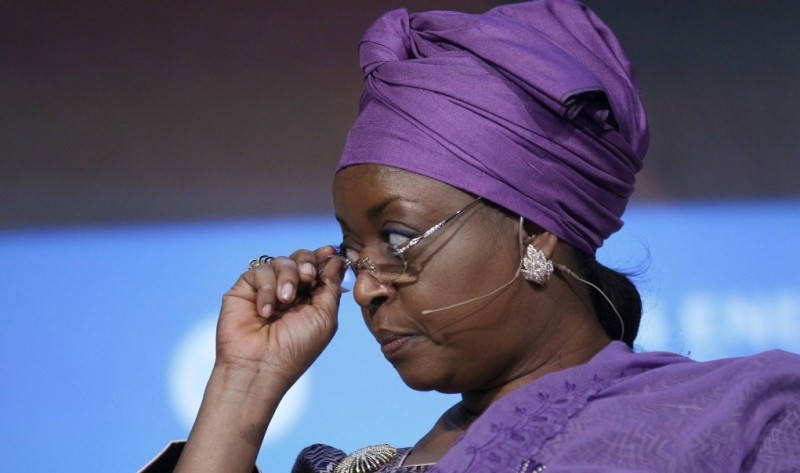
The acquittal of former Minister of Petroleum Resources, Diezani Alison-Madueke, by a United Kingdom court has reopened an uncomfortable but necessary conversation about some of Nigeria’s most high-profile corruption investigations and the evidence underpinning them.
For more than a decade, Alison-Madueke has remained one of the most prominent faces of Nigeria’s anti-corruption narrative. Her name has featured in multiple investigations, asset recovery efforts, court filings and public statements by anti-graft agencies, particularly the Economic and Financial Crimes Commission (EFCC).
Yet, the unanimous not-guilty verdict delivered by a jury at Southwark Crown Court after weeks of proceedings and more than 46 hours of deliberation raises legitimate questions about the strength of some of the allegations that have shaped public perception of the former minister since she left office in 2015.
The UK prosecution had accused Alison-Madueke of accepting luxury benefits from individuals connected to Nigeria’s oil and gas sector in exchange for influence. However, after hearing evidence presented by prosecutors and defence counsel, the jury found her not guilty on all six counts.
The verdict does not automatically exonerate her from every allegation ever made against her, nor does it invalidate other ongoing investigations or civil forfeiture proceedings. Nevertheless, it places a spotlight on the burden of proof and the need for law enforcement agencies to distinguish between allegations, public suspicion and evidence capable of securing convictions in court.
This is where Nigerian anti-corruption agencies, particularly the EFCC, may face renewed scrutiny.
Over the years, the agency has announced the recovery of assets allegedly linked to the former minister and pursued various court actions connected to alleged proceeds of corruption. In some instances, assets were forfeited through civil proceedings rather than criminal convictions, a legal distinction that often receives less public attention than headline-grabbing allegations.
The UK verdict is therefore likely to prompt fresh calls for greater transparency regarding the evidential basis of some of the claims that have been made publicly over the years.
Questions are likely to be asked. What specific evidence remains available against the former minister in Nigeria? Are there criminal cases that can still be successfully prosecuted? How do Nigerian authorities reconcile years of corruption allegations with a complete acquittal on the criminal charges tested in a UK court? And what implications does the verdict have for assets previously linked to the former minister through forfeiture proceedings?
The answers to these questions matter not only for Alison-Madueke but also for the credibility of Nigeria’s anti-corruption institutions.
A successful anti-corruption campaign cannot rest solely on public accusations or media headlines. Its legitimacy ultimately depends on evidence that can withstand judicial scrutiny, whether in Nigeria, the United Kingdom or any other jurisdiction.
For the EFCC and other security agencies, the acquittal presents an opportunity to clarify the status of existing investigations and reassure the public that actions taken against public officials are grounded in verifiable facts and due process.
For Nigerians, meanwhile, the case serves as a reminder that allegations, however serious, are not the same as convictions. In democratic societies governed by the rule of law, guilt is determined in courtrooms, not in public opinion.
The UK verdict may not be the final chapter in the long-running controversy surrounding Alison-Madueke. But it has undoubtedly shifted the conversation from accusation to evidence, and from suspicion to accountability. That is a conversation Nigeria’s anti-corruption agencies can no longer afford to ignore.