By Favour Pius,Abuja
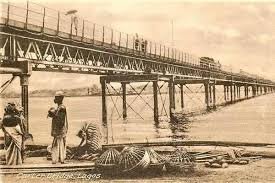
The Federal Executive Council (FEC) has approved the demolition and reconstruction of Carter Bridge in Lagos State.
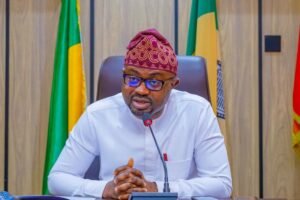
The development was disclosed by the Minister of Works, Dave Umahi, while briefing State House correspondents after the FEC meeting presided over by President Bola Tinubu on Wednesday, March 4, 2026, at the Presidential Villa in Abuja.
The council also approved several major road and bridge projects across the country, including the reconstruction of key highways.
The Minister of Works stated that the council approved N5.6 billion for advanced engineering consultants to carry out the design and costing for the Carter Bridge project.
He explained that technical assessments had shown the structure could no longer be rehabilitated, making demolition and reconstruction the most viable option.
“Recall that we have been to FEC and got approval after going through stakeholders’ engagements. The total recommendation was that Carter Bridge can no longer be rehabilitated; it should be demolished and then a new bridge constructed.’’
“Advanced Engineering Consultants was engaged to carry out the full design and cost evaluation ahead of the procurement process for construction.”
Umahi added that the reconstruction of the bridge forms part of broader efforts by the current administration to strengthen critical transport infrastructure across the country.
The Federal Executive Council also approved several other road construction and reconstruction projects aimed at improving connectivity and completing previously stalled infrastructure across Nigeria.
The council approved the completion of the Suleja–Minna Road project after the earlier contract awarded to Salini Construction Company was terminated due to poor performance. Only 10 kilometres of the road had been completed before the contract was cancelled.
The government has now awarded one carriageway of the remaining 71 kilometres to China Geo-Engineering Corporation (CGC) at a cost of N91 billion, while the second carriageway has also received clearance from the Bureau of Public Procurement (BPP).
FEC approved the review and rescoping of the 132-kilometre Kano–Kongolam Road, a tax credit project linking Kano, Jigawa, and Katsina states. The road, originally designed as an asphalt road, has now been redesigned as a three-lane concrete carriageway with solar-powered streetlights and closed-circuit television (CCTV) installations to enhance security. The revised project is estimated to cost N334 billion.
The council also approved the reconstruction of the Abuja–Lokoja Road following the termination of contracts previously awarded to two underperforming contractors. The affected 86-kilometre section will now be reconstructed using reinforced concrete and handled by five contractors, including Julius Berger, with the project estimated to cost N146 billion.
Additional approvals include the reconstruction of the 103-kilometre Ibadan–Ife–Ilesa Road valued at N427 billion and the second phase of the Keffi–Nasarawa–Abaji Road rehabilitation project covering 129.3 kilometres at a cost of N203 billion.
Umahi further disclosed that the Federal Government plans to commission at least four major road projects in each of the six geopolitical zones by May 15.
Umahi had said in July 2025 that the Federal Government is reviewing a proposal to replace the ageing Carter Bridge in Lagos with a N320 billion cable-stayed structure, considered a more durable and cost-effective alternative to the N380 billion required for full-scale repairs.
The minister said Julius Berger had completed 80% of the above-water repairs, but investigations uncovered severe underwater damage, corroded piles and detached caps similar to what led to truck restrictions on the Third Mainland Bridge.
He noted that past assessments in 2012 and 2019 had flagged these issues. A new bridge, he said, could last over 100 years and still cost less than the planned rehabilitation.