
By David Akinmola
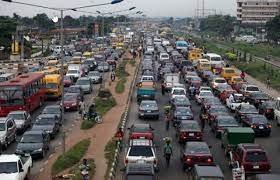
For motorists and passengers travelling between Lagos and Ibadan, the Long Bridge section of the Lagos-Ibadan Expressway has increasingly become a source of frustration, with prolonged traffic congestion turning what should be a routine journey into hours of uncertainty, stress and economic loss.
The situation is particularly difficult during peak travel periods, when traffic builds up around the Long Bridge and stretches backwards for several kilometres, leaving commuters trapped in slow-moving queues with little certainty about when they will reach their destinations.
Passengers travelling for work, business, school, medical appointments and other engagements are among those bearing the brunt of the delays, while commercial drivers complain of longer turnaround times, increased fuel consumption and higher maintenance costs.
For some commuters, the problem goes beyond the inconvenience of spending hours on the road.
Vehicles caught in prolonged traffic are exposed to constant stop-and-go movement, while motorists face the added pressure of navigating narrow spaces and competing for passage as congestion worsens.
The consequences are also felt by businesses whose workers, goods and customers depend on the Lagos-Ibadan corridor. Delays on the strategic route can disrupt delivery schedules, increase logistics costs and force commuters to leave home several hours earlier to avoid missing appointments.
The Long Bridge has become particularly significant because of its position on one of Nigeria’s busiest inter-state transportation corridors, linking Lagos with Ogun and Oyo states and serving motorists travelling to and from other parts of the country.
Commuters have repeatedly called for more effective traffic management, better enforcement and faster response to incidents capable of bringing traffic to a standstill.
They also want road construction and maintenance activities to be properly coordinated so that ongoing works do not compound existing congestion, particularly during periods of heavy traffic.
For many road users, however, the immediate concern is simple: how to get through the Long Bridge without losing several hours of the day.
The recurring gridlock has turned the journey between Lagos and Ibadan into more than a transportation problem. For thousands of commuters, it is now a daily calculation involving time, fuel, income, missed appointments and the physical and emotional strain of being trapped on the road.
With the Lagos-Ibadan corridor remaining critical to the movement of people and goods between the Southwest’s major commercial centres, commuters say prolonged disruptions along the route carry consequences far beyond the road itself.