
By David Akinmola
Yobe State Governor, Mai Mala Buni, has unveiled an emergency contributory healthcare enrolment scheme aimed at providing access to essential medical services for 30,240 vulnerable residents across the state.
The initiative, implemented through the Yobe State Contributory Healthcare Management Agency (YSCHMA), is supported by the Federal Government–backed Basic Healthcare Provision Fund (BHCPF) and is designed to expand healthcare access for underserved populations.
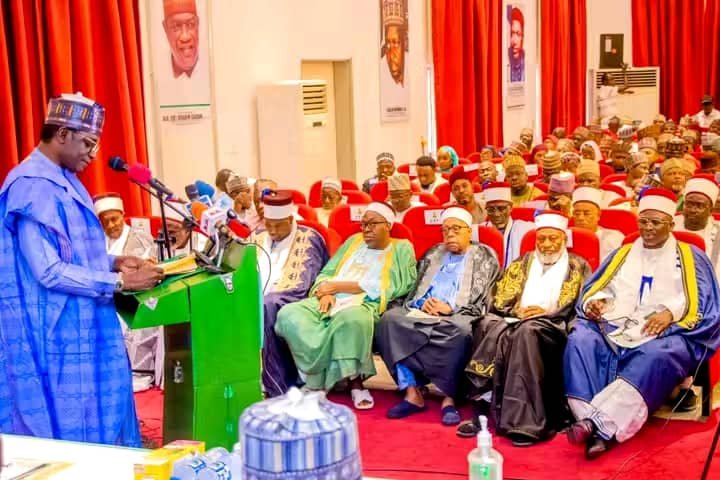
Speaking at the launch in Damaturu at the weekend, the Executive Secretary of YSCHMA, Dr. Babagana Tijjani, who represented the governor, said the scheme was a critical step towards improving healthcare delivery and achieving Universal Health Coverage (UHC) in Yobe State by 2030.
He explained that the programme specifically targets vulnerable groups, particularly those in insurgency-affected communities such as Geidam, Gujba, Yunusari, Gulani, Bursari and Karasuwa, where access to healthcare services has remained a major challenge.
According to Tijjani, the beneficiaries include children under five years, who account for 35 per cent of enrollees; pregnant women, 40 per cent; the elderly, seven per cent; and persons with disabilities, three per cent.
He added that widows, orphans, internally displaced persons (IDPs), indigent residents and sickle cell patients make up the remaining 14.5 per cent.
“The scheme is designed to protect the health and wellbeing of the most vulnerable members of our society and reflects the commitment of the Buni administration to building a compassionate and equitable healthcare system,” Tijjani said.
He disclosed that enrolment would be conducted across 162 political wards in the state’s 17 local government areas, excluding communities where security concerns persist.
To ensure transparency and accountability, Tijjani said beneficiaries would be verified using their National Identification Number (NIN) before being enrolled into the programme.
Also speaking, the Director of Information and Communication Technology (ICT) at YSCHMA, Saleh Ibrahim, described the scheme as a demonstration of the state government’s resolve to deliver inclusive and people-centred governance.
He noted that the successful rollout of the programme was supported by traditional and community leaders, civil society organisations and development partners, adding that protecting the most vulnerable remained both a moral duty and a development priority for the state.