By David Akinmola
AXA Mansard Insurance Plc has sustained its growth momentum in the first half of 2026, posting a 14 per cent increase in profit after tax to ₦7.8 billion while reaffirming that it is well positioned to meet the new minimum capital requirements under the Nigerian Insurance Industry Reform Act (NIIRA) 2025.
The insurer’s half-year performance comes as insurance companies intensify efforts to strengthen their balance sheets ahead of the industry’s recapitalisation programme, with operators increasingly focusing on underwriting discipline, digital transformation and business expansion to improve profitability despite macroeconomic headwinds.
The company’s unaudited financial results showed that insurance revenue rose by 19 per cent to ₦96.5 billion from ₦81.2 billion recorded in the corresponding period of 2025, while Gross Written Premium (GWP) increased by 17 per cent to ₦134.9 billion, reflecting strong business growth across its Property and Casualty, Life and Health businesses.
Health insurance remained the fastest-growing business line, with premiums rising by 32 per cent to ₦60.6 billion, followed by Life and Savings, which expanded by 21 per cent to ₦20.4 billion. Property and Casualty business also posted growth, with premiums increasing three per cent to ₦54 billion.
The insurer also recorded a 43 per cent growth in Insurance Service Result to ₦13.2 billion, underlining stronger underwriting performance across all business segments, while earnings per share increased by 15 per cent.
Despite recording a foreign exchange loss of ₦2.9 billion during the period, the company’s underlying earnings remained resilient. Excluding the foreign exchange impact, profit after tax would have increased by 54 per cent to ₦10.7 billion, highlighting significant improvements in underwriting performance and investment income.
Commenting on the performance, Chief Financial Officer of AXA Mansard, Ngozi Ola-Israel, attributed the growth to improved customer retention, expansion of new business and stronger underwriting performance.
She said the company remained focused on disciplined underwriting, cost optimisation and strengthening its balance sheet to deliver sustainable long-term value for shareholders.
“In H1 2026, we sustained topline momentum with a 19 per cent year-on-year increase in insurance revenues, underpinned by strong performance across all segments driven by our drive for new business and improved retention metrics.
“We delivered strong profit after tax of ₦7.8 billion, reflecting a 14 per cent year-on-year increase and a much stronger growth in the underlying earnings trajectory. Excluding foreign exchange impacts, profit after tax would have grown by 54 per cent,” she said.
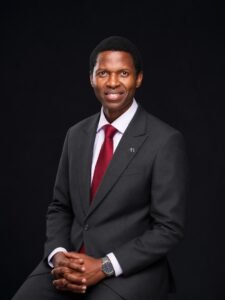
The Chief Executive Officer, Kunle Ahmed, said the performance demonstrated the resilience of the company’s diversified business model despite prevailing economic challenges.
He added that the insurer remains adequately capitalised to comply with NAICOM’s new minimum capital requirements, describing the company’s balance sheet as strong enough to support future growth.
“On capital adequacy, I am pleased to confirm that the Group remains well positioned to meet the new minimum capital requirements stipulated by NAICOM, underscoring the strength of our balance sheet and our commitment to maintaining a robust capital base,” Ahmed said.
He noted that the company would continue to prioritise profitable growth, strengthen underwriting standards, improve cost discipline and deepen investments in digital technology and data analytics as macroeconomic conditions gradually improve.
The performance, according to him, reflects the improving financial health of leading insurance companies as operators continue to balance premium growth with underwriting profitability amid inflationary pressures, exchange rate volatility and rising operating costs.
The strong growth in insurance revenue and underwriting income indicates increasing resilience in the company’s core operations, while its ability to remain profitable despite foreign exchange losses underscores the effectiveness of its risk management and business diversification strategy.
To him, the ongoing recapitalisation of the insurance industry is encouraging operators to strengthen their capital positions, improve operational efficiency and invest in technology to enhance customer experience and underwriting capacity.
The company’s total assets rose by 18 per cent to ₦269.9 billion, while shareholders’ funds increased by 11 per cent to ₦58 billion, reinforcing its financial position ahead of the industry’s recapitalisation deadline.
The results come at a pivotal period for Nigeria’s insurance industry as operators race to comply with the recapitalisation provisions of the NIIRA 2025, which seek to create stronger insurers capable of underwriting large-ticket risks in oil and gas, aviation, marine, infrastructure and other strategic sectors of the economy.
With sustained growth in insurance revenue, underwriting income and profitability, AXA Mansard appears well positioned to leverage opportunities in Nigeria’s underpenetrated insurance market while delivering long-term value to shareholders and policyholders through stronger capitalisation, operational efficiency and disciplined execution.