By David Akinmola
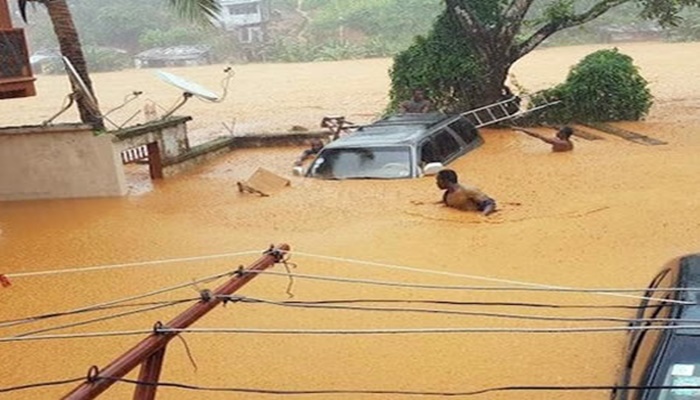
After floods wided out more than $15 billion in economic assets within two years and displaced millions of Nigerians, insurance stakeholders have called for urgent reforms to expand insurance coverage and disaster risk financing, warning that recurring climate disasters are pushing more families and businesses into long-term financial hardship.
The renewed call follows estimates that the country lost about $6.7 billion to the devastating floods of 2022 and another $9 billion in 2023, bringing cumulative economic losses to more than $15 billion within two years, even as climate experts warn that extreme weather events are becoming more frequent.
The losses, which wiped out homes, businesses, farmlands, public infrastructure and livelihoods across several states, have intensified concerns over Nigeria’s low insurance penetration, which remains below one per cent of the Gross Domestic Product (GDP), one of the lowest levels in Africa.
Managing Director of Heirs General Insurance, Wole Fayemi, said the increasing frequency of floods demonstrates the need for Nigeria to move beyond emergency relief and reconstruction towards building a comprehensive disaster risk financing framework capable of protecting businesses, households and public investments.
According to him, the country’s current approach places enormous pressure on governments and affected communities because most losses remain uninsured.
“The true cost of flooding is not the roads and buildings that are destroyed. It is the businesses that never reopen, the jobs that disappear and the investments delayed because recovery consumes resources meant for growth,” Fayemi said.
He observed that traders who lose their inventories, farmers whose crops are destroyed and small manufacturers forced to replace damaged equipment often struggle to recover because they lack financial protection.
He noted that the long-term consequences include declining productivity, rising poverty, business closures and reduced economic activity long after floodwaters have receded.
Fayemi argued that insurance should no longer be viewed merely as a financial product but as a strategic component of national economic infrastructure capable of preserving productive assets, protecting household wealth and accelerating post-disaster recovery.
He urged governments at all levels to establish dedicated disaster risk financing mechanisms, integrate insurance into climate adaptation programmes and expand affordable insurance products for farmers, small businesses and vulnerable households living in flood-prone communities.
He also called for the inclusion of flood insurance in public infrastructure projects and government-backed housing schemes to reduce future fiscal pressures arising from climate-related disasters.
According to him, regulators and insurers must collaborate to close Nigeria’s insurance protection gap through product innovation, digital distribution, greater public awareness and prompt settlement of genuine claims.
The Chairman of the Nigerian Insurers Association (NIA), Mrs. Ebelechukwu Nwachukwu, said climate change has significantly altered Nigeria’s risk environment, making insurance an essential instrument for economic resilience.
She said although insurers have continued to introduce products that respond to emerging climate risks, low public awareness, affordability concerns and weak enforcement of compulsory insurance have continued to limit insurance uptake.
“Insurance is designed to restore businesses and households after unexpected losses. As climate-related disasters become more frequent, the need for adequate insurance protection becomes even more compelling. Building public confidence through prompt claims settlement and greater awareness remains critical to increasing insurance penetration,” she said.
The Commissioner for Insurance, Olusegun Omosehin, has repeatedly maintained that the ongoing recapitalisation of the insurance industry under the Nigerian Insurance Industry Reform Act (NIIRA) 2025 is designed to produce stronger insurers capable of underwriting larger and more complex risks, including those associated with climate change.
According to him, stronger capital bases will improve insurers’ claims-paying ability, enhance public confidence and enable the industry to retain more strategic risks within the domestic economy.
Financial analysts noted that while governments continue to spend billions of naira on emergency interventions after major floods, relatively little attention has been given to building sustainable financial resilience through insurance and disaster risk financing.
They argued that expanding agricultural insurance, property insurance, catastrophe insurance and microinsurance would reduce pressure on government finances while enabling affected households and businesses to recover more quickly after disasters.
The analysts further observed that Nigeria’s vulnerability to climate shocks has increased significantly over the past decade, making disaster risk financing an economic necessity rather than a policy option.
They maintained that strengthening collaboration among governments, regulators, insurers, development finance institutions and international partners would be critical to closing the country’s protection gap and improving resilience against future climate disasters.
With the Nigeria Hydrological Services Agency (NIHSA) recently issuing fresh flood alerts for several states, stakeholders warned that the country can no longer rely solely on post-disaster relief but must institutionalise insurance and risk financing as key components of national development planning.
They stressed that unless adequate financial protection mechanisms are put in place, recurring floods will continue to destroy livelihoods, widen poverty, discourage investment and undermine Nigeria’s economic growth ambitions.