By David Akinmola
Lagos State Government has taken another major step towards translating its climate commitments into concrete investments with the launch of a Climate Defence and Catalytic Fund (CDCF), a financing mechanism designed to unlock private capital for climate-resilient infrastructure and accelerate the state’s transition to a low-carbon economy.
The initiative, unveiled at the Climate Finance Leadership and Recognition Ceremony in Lagos, comes weeks after the state introduced its pioneering State-Determined Contributions (SDC) Framework and signed a Memorandum of Understanding (MoU) with the Under2 Coalition during the London Climate Action Week, reinforcing its ambition to become Africa’s leading sub-national climate finance hub.
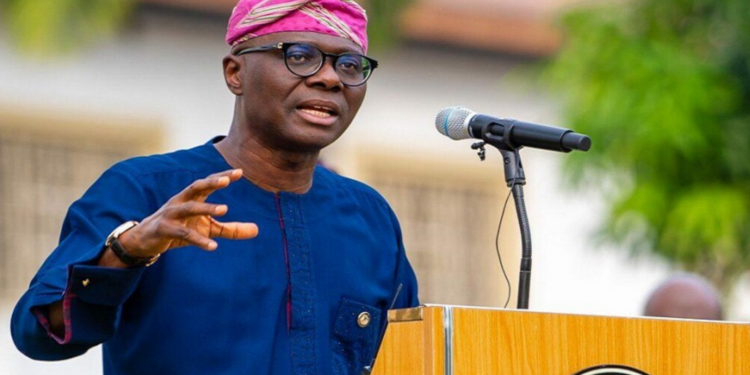
Governor Babajide Sanwo-Olu, represented by the Deputy Governor, Dr. Obafemi Hamzat, said the new fund would bridge the financing gap for climate projects by mobilising catalytic capital, strengthening project preparation and attracting domestic and international investors into renewable energy, resilient infrastructure and other green investments.
The event also marked the conclusion of the maiden Climate Finance Preparedness Clinic (CFPC), organised by the Lagos State Office of Climate Change and Circular Economy (OCCE) to strengthen institutional capacity for climate finance mobilisation.
Sanwo-Olu described the fund as a strategic platform that would transform climate policies into investment-ready projects capable of attracting long-term financing.
According to him, the state will deploy blended finance structures, guarantees, technical assistance and other risk-sharing instruments to reduce investment risks while improving investor confidence.
“Capital follows confidence, and confidence follows preparation. The success of climate action depends not only on ambitious policies, but on credible institutions, technically sound projects, reduced investment risks and stronger public-private partnerships,” he said.
The governor stressed that public resources alone would be insufficient to finance climate adaptation and mitigation, urging governments, financial institutions, development partners and private investors to collaborate in closing the country’s climate financing gap.
“The future demands blended finance, stronger partnerships and institutions capable of preparing projects that inspire investor confidence,” he added.
Speaking at the event, the Special Adviser to the Governor on Climate Change and Circular Economy, Mrs. Titilayo Oshodi, said the next phase of climate leadership would be determined by the ability of cities to convert climate ambitions into bankable projects capable of attracting investment.
She noted that while global climate finance continues to expand, many cities still struggle to access available funding because of inadequate institutional capacity and weak project preparation.
“The challenge is no longer capital. It is bankability,” Oshodi said.
She explained that the Climate Finance Preparedness Clinic was deliberately designed to bridge the gap between climate policy and investment by bringing together policymakers, financial institutions, regulators, development partners, project developers and private sector organisations.
According to her, while the State-Determined Contributions Framework focuses on creating investment-ready climate projects, the clinic prepares institutions and stakeholders to finance and implement them.
“Policies alone do not build resilient infrastructure. Commitments alone do not deliver renewable energy. Strategies alone do not protect communities or strengthen economies. It is finance that transforms ideas into projects, projects into investments and investments into measurable impact,” she said.
Oshodi disclosed that the Climate Defence and Catalytic Fund would operate with robust monitoring, reporting and impact measurement mechanisms to ensure transparency, accountability and measurable environmental and financial outcomes.
She added that the fund forms part of a broader climate finance architecture that includes the State-Determined Contributions Framework, the Eco-Label Certification System and the Climate Finance Preparedness Clinic, all designed to position Lagos as a leading destination for sustainable investment.
Climate finance experts described the initiative as a significant milestone in strengthening sub-national climate governance, noting that inadequate project preparation has remained one of the biggest barriers preventing African cities from attracting international climate capital.
According to them, the fund could unlock investments in renewable energy, sustainable transportation, circular economy projects, climate-smart infrastructure and carbon markets, while creating jobs, stimulating innovation and improving economic resilience.
They added that if successfully implemented, the Lagos model could serve as a template for other states seeking to develop credible climate financing frameworks capable of attracting institutional investors and development finance institutions.
Stakeholders also observed that the launch signals a shift from climate policy formulation to implementation, positioning Lagos to leverage growing global demand for sustainable investments while advancing its net-zero emissions target and strengthening resilience against climate-related risks.