…President promises lower living costs, jobs, industrial growth, wider economic opportunities
By Emmanuel Enitan
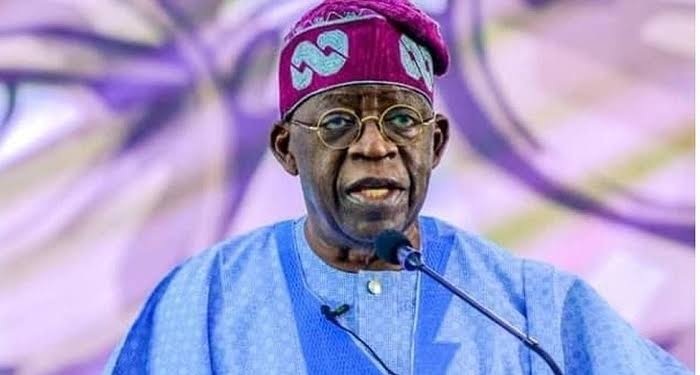
President Bola Tinubu has declared that Nigeria has moved beyond the most difficult phase of his administration’s economic reforms, announcing a shift towards what he described as an “age of prosperity” anchored on lower living costs, productive jobs, industrial expansion and wider economic opportunities.
Tinubu made the declaration yesterday in his Independence Day address to Nigerians as the country marked its 66th anniversary, saying the central economic task had changed from correcting the country’s economic direction to ensuring that the benefits of reforms translated into improved living standards and shared prosperity.
“The emergency treatment is over. The foundation has been repaired. The central economic task before us has changed,” the President said, adding that the administration’s overriding purpose for the past three years had been to correct Nigeria’s economic course.
“Now, our purpose is simple: shared and widespread prosperity,” he said.
Tinubu said the next phase would focus on reducing the cost of living by lowering the cost of producing and transporting goods, while expanding agricultural production, improving infrastructure and supporting businesses.
He said the government would expand mechanised irrigation and dry-season farming, improve access to seeds and fertiliser, invest in storage and transportation, and continue the construction and completion of roads, railways and ports linking farms and factories to markets.
According to him, reducing production and transportation costs, improving electricity supply and strengthening competition would ultimately help lower prices of goods and services.
The President also placed job creation and industrial growth at the centre of the new economic agenda, saying Nigeria’s youthful population must become an engine of production rather than a source of economic hardship.
“We are therefore placing jobs, enterprise, and industrial growth at the heart of our government’s policies,” he said.
Tinubu said the government would deploy Nigeria’s gas resources to power industries, support businesses seeking to revive factories, expand digital connectivity and invest in skills required by employers.
He also pledged greater support for Nigerian businesses through infrastructure and access to finance, with the objective of increasing domestic production and strengthening the country’s capacity to compete in international markets.
“I want to see more Nigerians making things. I want to see more Nigerian farms feeding our cities and supplying our factories. I want to see Nigerian businesses selling Nigerian goods to the whole world,” he said.
The President said the government’s assessment of the economy showed signs of improvement after three and a half years of reforms, citing economic growth of more than four per cent in 2026, lower inflation from its peak, rebuilt foreign reserves and a more stable foreign exchange market.
He also said Nigeria recorded more than $6 billion in non-oil export revenue in 2025, which he described as the highest in the country’s history.
Tinubu maintained that the reforms did not create the structural weaknesses confronting the economy but were intended to address them, warning against a return to policies that, in his view, had allowed economic distortions to persist.
“We must never confuse the medicine with the disease,” he said, defending the difficult choices taken by his administration.
He, however, acknowledged that millions of Nigerians continued to struggle with food, school fees, medical bills and transportation costs, saying the government recognised that the benefits of economic reforms had not yet translated into prosperity for all households.
The President said the government would strengthen direct support for vulnerable Nigerians, improve the National Social Register and expand access to education, healthcare and other essential services.
He also cited the Nigerian Education Loan Fund and consumer credit initiatives as part of measures intended to provide support and expand economic opportunities.
“These programmes are not substitutes for prosperity. They are a bridge to aid our nation’s citizens on their path towards it,” Tinubu said.
“Our objective is not to manage poverty more efficiently. We will defeat it.”
He acknowledged that achieving the new prosperity agenda would take time, sustained economic growth and the creation of millions of productive opportunities across the country.
“But for the first time in decades, we embark on this task from a position of strength; with an economy whose fundamental direction has been corrected,” he said.
“The age of reform has done its work. Now begins the age of prosperity. An age in which the promise of this great nation must finally become the lived experience of Nigerians from all walks of life.”
Tinubu urged Nigerians to look ahead and build on the reforms, saying the country had “corrected its course” and should now focus on translating the foundations laid by the reforms into tangible improvements in the lives of citizens.
He said the next phase would require collective effort, discipline and continued investment in productive capacity, infrastructure, enterprise and human capital.
“The road ahead will still demand much from us. But we now travel it with firm footing, a clear direction, and renewed hope in our collective future,” he said.